 The swing bridge leading to the “Molo Mediceo”.
 A view from the “Scali Novi Lena”, across the “Darsena Nuova”.
 The other side of the bridge, facing the “Porto Mediceo”.
 The swing bridge leading to the “Molo Mediceo”.A view from the “Scali Novi Lena”, across the “Darsena Nuova”.The other side of the bridge, facing the “Porto Mediceo”.
 “I am not an ashtray, humans”.
 “If I ever see who drops his trash in front of the pizzeria... he'll end up inside the bag. Sabrina”.
 “This part of the street is under video surveillance. Pictures of the owners not cleaning up after their dogs will be published on our local paper. An eye for an eye... ”
 The peculiar gazebo of a villa facing the “Rotonda di Ardenza”.
 The angle is slightly different, but the villa hasn't changed much...
 ... since the photograph of this century-old postcard was taken.
 A detail of the villa's weather vane, a device not so common here.
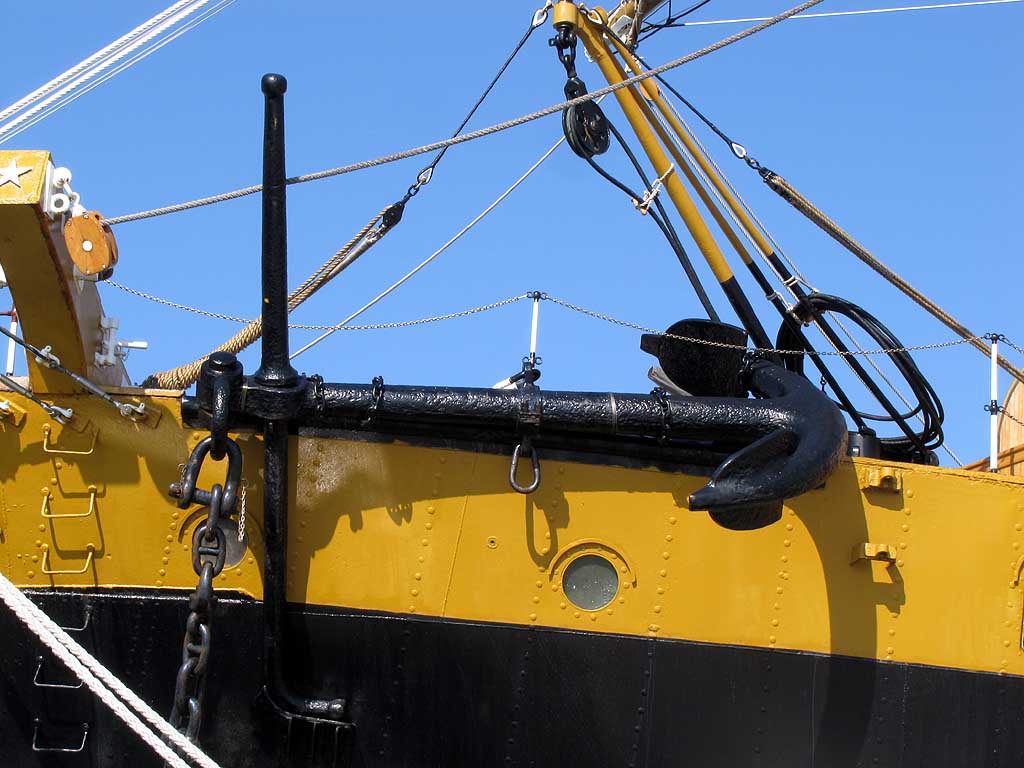 One of the main anchors of the “Amerigo Vespucci”, for any doubt about the size look here.
 The backup anchor, known as “ancora di rispetto”.
 The two starboard anchors and a view of the “Porto Mediceo”.
 Leonetto Cappiello was born on 9 April 1875 in Livorno. He was an Italian painter and art designer who lived mostly in Paris. He is now often called “the father of modern advertising” because of his innovation in poster design.
 Cappiello, like other young artists, worked in way that was almost the opposite of his predecessors. He was the first artist to use bold figures popping out of black backgrounds, a startling contrast to the posters early tradition.
 In 1898 he moved to Paris, where his caricatures were published for the first time in the humor magazine “Le Rire”. Cappiello made his name during the poster boom of the early 20th century, with creations markedly different from the works of Jules Chéret, the leading poster artist of the time.
 Cappiello died in Cannes in 1942. Over the course of his career he produced more than 530 advertising posters which surprise and delight the viewer. Today, his original posters are still collected, sold at auctions and by dealers around the world.
 The majestic front door of the “Black Eagle”.
 A side door into the church of “Santa Maria del Soccorso”.
 A building on the “Scali Saffi” seen from the “Scagli degli Olandesi”, just across the canal. The line of stones below is the parapet of the “Fosso Reale” (Royal Canal).
 Detail of a lamp post in “Piazza della Repubblica”.
 Front door, mailboxes and a window in “Via Gramsci”.
 “Viale Marconi”, a building in not very good condition.
 A cat guarding his garden in “Via dell'Olmo” (Elm Street).
 The statue of winged Victory of the First World War Memorial in “Piazza della Vittoria”.

